


What Is Cybersecurity?
Cybersecurity refers to the technologies, processes, and practices designed to protect systems, networks, and data from digital attacks. It safeguards everything from confidential client records to financial data and operational systems.
But here’s the shift. Modern cybersecurity isn’t just about being reactive and blocking threats.
Modern cybersecurity must be proactive. It’s about anticipating risk, reducing exposure, and then responding fast when incidents occur. At its core, cybersecurity protects three pillars.
-
Confidentiality: Preventing unauthorized access
-
Integrity: Ensuring data isn’t altered or corrupted
-
Availability: Keeping systems accessible when you need them
Miss one pillar, and the entire structure weakens.
The Importance of Cybersecurity
Cybersecurity is mission-critical because digital systems power nearly every business function. Email, cloud platforms, CRMs, financial tools, and collaboration software all rely on secure access.
Here’s the hard truth. A single breach can disrupt operations, expose sensitive data, and permanently damage both trust and reputation.
Cybercriminals specifically target organizations with weak defenses, outdated systems, or minimal monitoring.
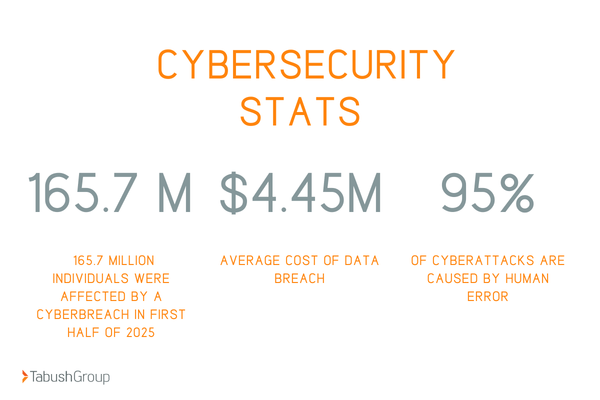
In the first half of 2025 alone, there were about 1,732 publicly reported breaches in the U.S., affecting roughly 165.7 million individuals.
Strong cybersecurity protects more than data. It protects revenue, reputation, and long-term viability.
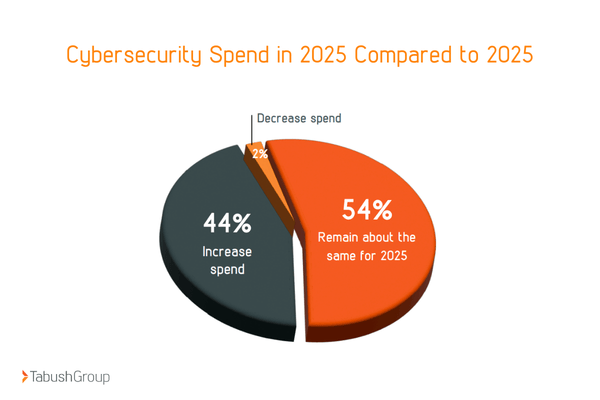
According to our 2025 Law Firm Survey, 44% of respondents reported wanting to increase spending in cybersecurity from the previous year.
Cybersecurity Risks To Be Aware Of
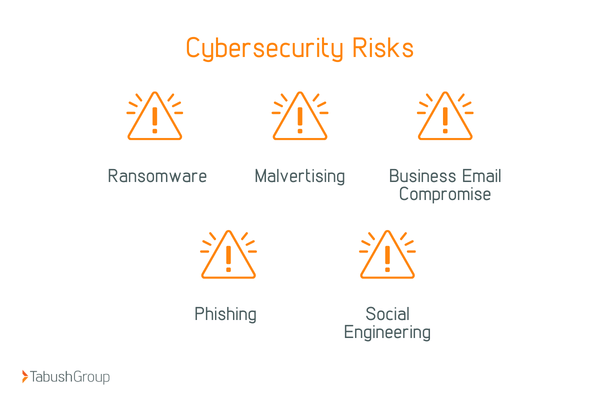
Cyber threats aren’t slowing down; they’re evolving and increasing in frequency. Below are the most common and most dangerous cybersecurity risks organizations face today.
1. Ransomware
Ransomware encrypts critical data and demands payment to restore access. It’s disruptive, costly, and it’s becoming more sophisticated.
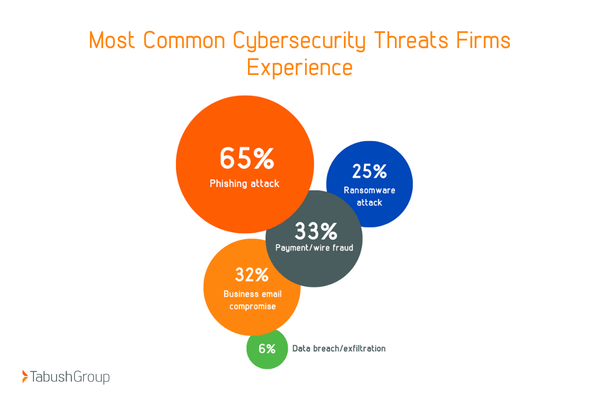
In our 2025 Law Firm Survey, 25% of respondents experienced ransomware attacks. One area that often gets overlooked is inactive accounts, which can lead to ransomware exposure.
Old user accounts with weak credentials provide attackers with silent entry points. Once inside, ransomware spreads quickly across connected systems.
Without layered cybersecurity controls, recovery becomes expensive and uncertain.
2. Malvertising
Malvertising hides malicious code inside legitimate-looking online ads. One click is all it takes.
Employees may unknowingly download malware while browsing trusted websites. From there, attackers can steal credentials, install spyware, or move laterally across the network.
Cybersecurity defenses must extend beyond email protection to web traffic and endpoint security.
3. Business Email Compromise (BEC)
BEC attacks manipulate trust. Attackers impersonate executives, vendors, or partners to trick employees into wiring funds or sharing sensitive data.
And the risk is growing. The rising popularity of Microsoft Office 365 makes it a prime target for cybercriminals. 32% of respondents in our 2025 Law Firm Survey reported email compromises.
Stolen credentials allow attackers to monitor conversations and strike at the perfect moment. Without multi-layered cybersecurity controls, these attacks often go undetected until it’s too late.
4. Phishing
Phishing remains one of the most effective cyberattack methods. According to our 2025 Law Firm Survey, 65% of respondents reported experiencing phishing attacks.
Emails appear legitimate, and the links look real. Then, some sort of urgency pressures users into action.
A single successful phishing email can expose login credentials, trigger malware downloads, or enable full account takeover.
Cybersecurity relies as much on user awareness as it does on technical defenses.
5. Social Engineering
Social engineering attacks exploit human behavior rather than technical vulnerabilities. Attackers use persuasion, fear, or authority to bypass security controls.
Phone calls, text messages, and fake support requests are common tactics, which is why cybersecurity must include continuous training, not just tools.
Security Is Not Just a Worry for the Enterprise
Small and mid-sized businesses are no longer flying under the radar. In fact, SMBs are often more attractive targets due to limited resources and weaker cybersecurity defenses.
Here’s why SMB cybersecurity risk is rising.
-
Fewer internal IT resources
-
Inconsistent security policies
-
Delayed patching and updates
-
Limited monitoring capabilities
Cybercriminals know SMBs still store valuable data. They just assume defenses are easier to bypass. That assumption is often correct.
The Consequences of a Cyber Breach
A cyber breach impacts far more than your IT department. It affects operations, finances, reputation, and long-term business stability.
Below are the real-world consequences organizations often underestimate until it’s too late.
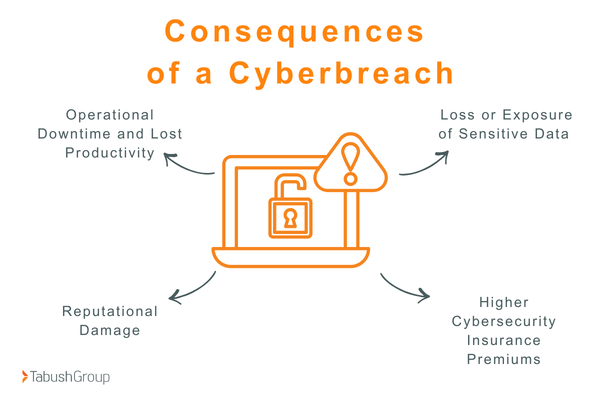
1. Operational Downtime and Lost Productivity
When a cyber breach occurs, systems don’t just slow down; they often come to a complete halt. Critical applications, email platforms, and file access may be unavailable while the incident is investigated and contained.
As a result, employees are unable to work efficiently, and customer-facing services are disrupted. Plus, revenue stalls while internal teams are pulled away from their normal responsibilities to focus on recovery efforts.
Without proper cybersecurity planning, downtime can extend from hours into days or even weeks. According to IBM, it takes an average of 241 days to identify and contain an active breach.
The longer systems remain offline, the greater the financial and operational impact becomes.
2. Loss or Exposure of Sensitive Data
One of the most damaging consequences of a cyber breach is the loss or exposure of sensitive data. Client records, financial information, employee data, and intellectual property can all become liabilities overnight.
Data exposure often triggers legal obligations, regulatory penalties and fines, and mandatory breach notifications. These requirements add cost, complexity, and public scrutiny at an already stressful time.
Once sensitive data leaves your control, the damage cannot be undone. Even if systems are restored, trust and confidentiality may be permanently compromised.
3. Reputational Damage
Trust is fragile, and cybersecurity incidents test it immediately. A single breach can undo years of hard-earned credibility with clients, partners, and stakeholders.
Customers may hesitate to share personal information or question whether their data is truly safe. In competitive industries, that hesitation often leads to lost business and long-term churn.
Rebuilding reputation takes time, transparency, and significant investment. In many cases, reputation recovery costs more than the technical breach recovery itself.
4. Higher Cybersecurity Insurance Premiums
Cybersecurity insurance providers now evaluate risk more closely than ever. Insurers assess security controls, monitoring capabilities, and incident response readiness before issuing or renewing coverage.
Organizations with weak cybersecurity measures face higher premiums, reduced coverage, or outright denial. After a breach, these costs frequently increase even further.
Cybersecurity is no longer optional protection. It has become a financial requirement that directly impacts operating costs, insurability, and overall business resilience. From downtime to fines, the global average cost of a data breach hit approximately $4.45 million in 2025.
Tips to Minimize Cybersecurity Risk
Strong cybersecurity requires a proactive, layered approach that reduces exposure while improving detection and response. No single tool or tactic is enough on its own, which is why effective cybersecurity strategies focus on prevention, visibility, and preparedness working together.
Below are essential practices every organization should implement to reduce cybersecurity risk and strengthen resilience.
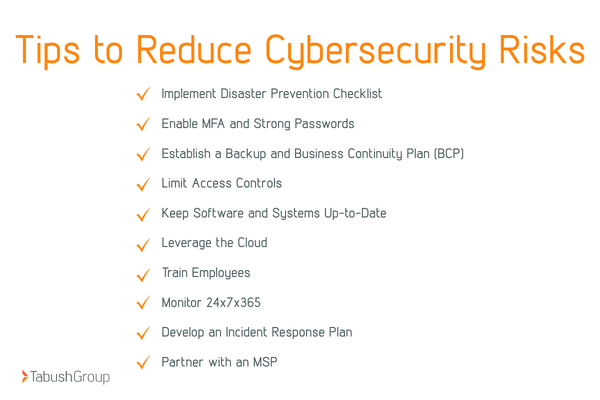
1. Implement Disaster Prevention Checklist
Prevention is the foundation of any effective cybersecurity strategy. The goal is to identify and address weaknesses before attackers can exploit them.
A strong disaster prevention checklist includes regular risk assessments, ongoing vulnerability scanning, and consistent enforcement of security policies. These activities help uncover misconfigurations, outdated systems, and risky user behavior early.
When prevention is done well, threats are stopped before they escalate into full-scale incidents.
2. Enable MFA and Strong Passwords
Multi-factor authentication (MFA) is one of the most effective cybersecurity controls available today. Even if login credentials are stolen, MFA prevents unauthorized access by requiring an additional verification step.
Many organizations are also rethinking traditional password policies. Forced password expiration often leads to weaker passwords and poor user habits.
Long, complex passwords combined with MFA are more secure and significantly easier for users to manage. This approach strengthens protection without sacrificing productivity.
3. Establish Backup and Business Continuity Plan (BCP)
Backups are your last line of defense during a cyber incident, especially in ransomware scenarios. However, not all backup strategies provide the same level of protection.
Cybersecurity-focused backups should be:
-
Automated
-
Encrypted
-
Tested regularly
-
Isolated from production systems
These safeguards ensure data can be restored quickly and safely when it matters most.
Business continuity planning goes a step further by outlining how operations continue during an outage or breach. With BCP in place, organizations can minimize downtime and maintain critical functions even during a cyber event.
4. Limit Access Controls
Not every user needs access to every system or file. Excessive permissions increase risk and expand the potential impact of a compromised account.
Least-privilege access limits users to only what they need to perform their roles. This approach reduces attack surfaces and contains damage if credentials are stolen.
Cybersecurity thrives on controlled exposure, not unrestricted access.
5. Keep Software and Systems Up-to-Date
Unpatched systems are one of the easiest targets for attackers. Cybercriminals actively scan for known vulnerabilities and exploit them quickly.
Regular updates close these gaps and strengthen the overall security posture. This includes operating systems, applications, firmware, and third-party tools.
Effective cybersecurity depends on consistency and discipline, not shortcuts or delayed updates.
6. Leverage the Cloud
Cloud platforms offer advanced security controls, built-in redundancy, and scalable protection that many on-premise environments struggle to match. When configured correctly, cloud environments can significantly improve cybersecurity resilience.
However, misconfiguration remains a leading cause of cloud-related breaches. Improper permissions, exposed storage, and weak identity controls introduce new risks.
Expert oversight ensures cloud environments are optimized for both performance and security.
7. Train Employees
The most overlooked piece of cybersecurity is your people. Employees are both the first line of defense and the most frequently targeted attack vector.
Phishing, social engineering, and credential theft rely on human interaction to succeed. That’s why 72% of respondents from our 2025 Law Firm Survey responded that they will be increasing their training and education.
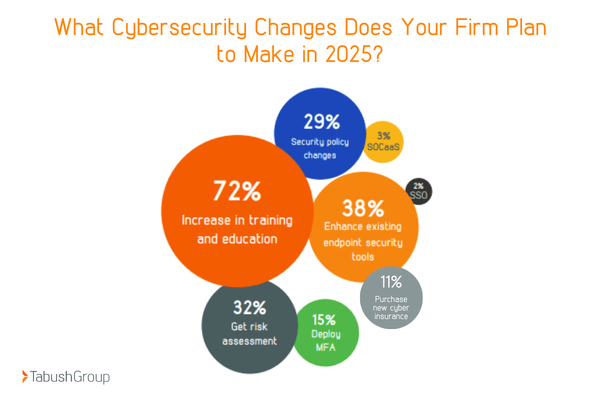
Consistent training helps employees:
-
Recognize threats
-
Respond appropriately
-
Avoid risky behavior
A strong security culture dramatically reduces successful attacks across the organization.
8. Monitor 24x7x365
Cyber threats do not operate on a schedule. Attacks often occur after hours, on weekends, or during holidays when staffing is limited.
Continuous monitoring provides real-time visibility into suspicious activity across systems and networks. This allows security teams to respond immediately, limiting damage and reducing recovery time.
Without visibility, cybersecurity becomes reactive instead of proactive.
9. Develop an Incident Response Plan
Even the strongest cybersecurity defenses cannot prevent every threat. When an incident occurs, preparation determines the outcome.
A documented incident response plan ensures teams know exactly what to do, who to notify, and how to contain the threat. Clear procedures reduce confusion, speed up recovery, and minimize overall impact.
The faster an organization responds to a cyber incident, the less damage it sustains.
10. Partner with an MSP
Managing cybersecurity internally is challenging, especially as threats continue to evolve. Partnering with a managed service provider (MSP) gives organizations access to specialized expertise, advanced tools, and continuous oversight.
An MSP helps identify risks early, maintain secure systems, and respond quickly to threats.
This approach shifts cybersecurity from reactive to proactive while reducing strain on internal teams.
Top Cybersecurity Mistakes Organizations Make
Even organizations with good intentions often undermine their own cybersecurity posture. The issue isn’t negligence, it’s misplaced assumptions. Here are the most common cybersecurity mistakes that quietly increase risk.
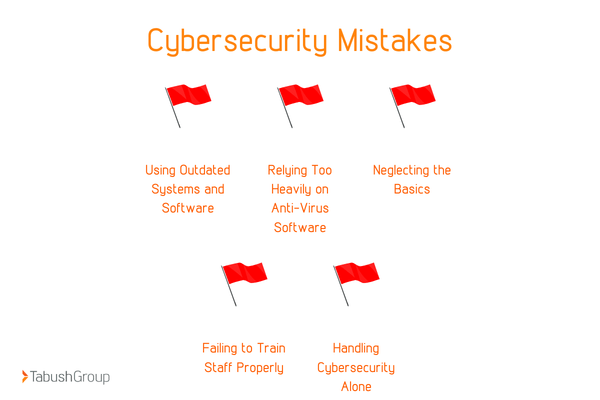
1. Using Outdated Systems and Software
Legacy systems are a hidden liability. Older software often lacks security patches, leaving known vulnerabilities permanently exposed.
Outdated systems frequently connect to modern tools, creating an open bridge between secure and insecure environments. That single weak link can compromise your entire network.
Strong cybersecurity requires continuous updates, lifecycle management, and proactive system reviews.
2. Relying Too Heavily on Anti-Virus Software
Anti-virus software is not a complete cybersecurity strategy. Signature-based tools can only detect known threats, and modern attacks evolve faster than signature updates can keep up.
That’s why round-the-clock monitoring is critical. 24x7 visibility allows teams to detect unusual behavior, contain threats early, and stop attacks before they escalate.
Cybersecurity today demands detection, response, and human oversight, not just software licenses.
3. Neglecting the Basics
This is where many breaches begin.
-
Weak passwords
-
No multi-factor authentication (MFA)
-
Poor access controls
-
Unencrypted data
-
Infrequent updates
While each gap seems small on its own, together they create a wide-open attack surface.
Your first line of defense is often the simplest. Strong credentials, MFA, encryption, and least-privilege access dramatically reduce risk when implemented consistently.
Cybersecurity fundamentals still matter, and attackers count on organizations forgetting them.
4. Failing to Train Staff Properly
Technology can’t outpace human error. Employees remain the most targeted attack vector through phishing, social engineering, and credential theft.
Many organizations treat cybersecurity training as a one-time checkbox. Threats change constantly, but employee awareness doesn’t.
Effective cybersecurity requires ongoing education, real-world simulations, and reinforcement. Informed employees become defenders, not liabilities.
5. Handling Cybersecurity Alone
DIY cybersecurity creates blind spots. Internal teams are often stretched thin, managing daily operations while trying to stay ahead of evolving threats.
Cyber threats move fast, adapt quickly, and exploit gaps before teams even know they exist. Without expert oversight, issues often go undetected until damage is done.
Partnering with cybersecurity specialists ensures defenses stay current, monitored, and aligned with best practices. Expert support turns cybersecurity from reactive to resilient.
Industries Where Cybersecurity Is Crucial
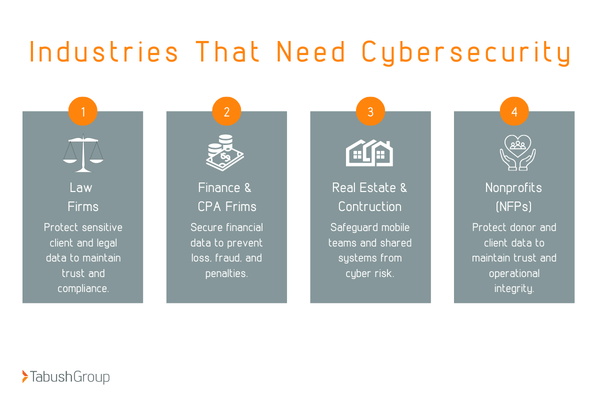
While every organization faces cyber risk, certain industries are especially vulnerable due to strict regulatory requirements, sensitive data, and complex workflows.
For these sectors, cybersecurity is not just a best practice; it is a business necessity.
Below are industries where strong cybersecurity controls play a critical role in protecting operations, compliance, and trust.
Law Firms
Law firms manage highly sensitive and confidential information, including client records, legal strategies, financial data, and privileged communications. This makes them attractive targets for cybercriminals seeking valuable data for extortion, fraud, or resale.
Even a minor cybersecurity incident can have serious consequences. Breaches may trigger ethical violations, legal liability, and mandatory disclosure requirements, all of which can damage client trust.
Strong cybersecurity controls such as secure access, encryption, and continuous monitoring are essential to protecting confidentiality and maintaining professional responsibility.
Finance and CPA Firms
Finance and CPA firms are prime targets for cyberattacks because they handle direct access to money, tax records, and personal financial data. Attackers often use phishing, credential theft, and business email compromise to exploit these environments.
A single breach can lead to financial loss, regulatory penalties, and long-term reputational damage. Clients expect their financial information to be protected at all times, with no margin for error.
Robust cybersecurity measures, including strong access controls, multi-factor authentication, and real-time monitoring, are critical to preventing unauthorized access and detecting suspicious activity early.
Real Estate and Construction Firms
Real estate and construction firms face unique cybersecurity challenges due to their mobile workforces and distributed operations. Teams often access systems from job sites, shared offices, and personal devices, increasing exposure to cyber risk.
Project plans, contracts, payment information, and client data are frequently shared across platforms and vendors. Without proper cybersecurity controls, these touchpoints become vulnerable entry points for attackers.
Secure access management, cloud-based protections, and centralized monitoring help reduce risk while supporting collaboration and productivity across projects.
Nonprofit Organizations (NFPs)
Nonprofits handle sensitive donor information, financial records, and often confidential client data. Limited IT budgets and staffing make NFPs attractive targets for cybercriminals seeking valuable information or to disrupt operations.
Even small security lapses can erode donor trust, trigger compliance issues, and impact funding. Implementing strong access controls, encrypted data storage, continuous monitoring, and staff training is essential to protect mission-critical information and maintain organizational integrity.
Cybersecurity Questions To Ask Your IT Team
Asking the right cybersecurity questions reveals your organization’s true cybersecurity posture. It helps identify gaps, clarify responsibilities, and ensure your business is protected against evolving threats.
Risk Assessment
-
When was the last time a third party performed a thorough risk assessment to identify potential security vulnerabilities?
-
What is our current cybersecurity risk profile?
-
Have we conducted a thorough risk assessment to identify vulnerabilities?
-
What steps have we taken to mitigate the most significant risks identified in past assessments?
Data Protection
-
How is sensitive customer data stored and protected?
-
What is our data backup strategy, and how often are backups tested?
-
Do we have data loss prevention measures in place?
Network Security
-
What systems are in place to safeguard our network?
-
Are we using intrusion detection/prevention systems (IDS/IPS)?
-
How do we monitor for suspicious network activity?
User Access Control
-
Does our firm have employee access permissions?
-
How are permissions determined, and how often are they reviewed?
-
How do we manage employee access to sensitive data based on their roles?
Password Management
-
What password policies do we enforce?
-
Do we utilize multi-factor authentication (MFA) across all accounts?
Training & Education
-
What cybersecurity training is provided, and how often is it updated?
-
Are employees educated on phishing scams and how to identify them?
-
Are employees trained on secure remote work practices?
-
How do we measure the effectiveness of our cybersecurity training programs?
Incident Response
-
What is your cyber breach response plan?
-
Do we have a documented incident response plan for cyberattacks?
-
How do we detect and respond to potential security breaches?
-
Who is responsible for coordinating the incident response process?
System Updates and Patching
-
What is our patch management and maintenance plan?
-
How frequently are operating systems and software applications patched with security updates?
-
Do we have a process for testing updates before deploying them across the network?
Compliance
-
Are we adhering to industry-specific cybersecurity regulations or compliance standards?
-
Do we have documentation for all security controls in place?
-
How do we ensure ongoing adherence to our policies?
Third-Party Security
-
How do we assess the cybersecurity practices of our third-party vendors?
-
Do we have contracts in place with vendors outlining security requirements?
-
What actions do we take if a vendor experiences a security breach?
Cyber Insurance
-
Does our organization have cyber insurance?
-
Does our policy provide comprehensive protection against all types of cyber threats?
-
When was the last time we updated our policy?
If answers are unclear, cybersecurity gaps likely exist. If your IT team is lacking the time or resources to answer these questions, it may be time to reach out to a third-party professional to help.
Protect Your Business With A Cybersecurity Partner
Cybersecurity isn’t about fear; it’s about control. By understanding today’s threats, implementing layered defenses, and prioritizing people, organizations can protect sensitive data and build a resilient IT defense.
Cyber threats will continue to evolve. Your defenses must evolve faster.
Are your current cybersecurity measures proactive or reactive? At Tabush Group, we help organizations strengthen cybersecurity, reduce risk, and respond with confidence.
Our team delivers strategic protection, continuous monitoring, and expert guidance, so your business stays secure, compliant, and resilient. When cybersecurity is done right, it becomes a competitive advantage, not a liability.