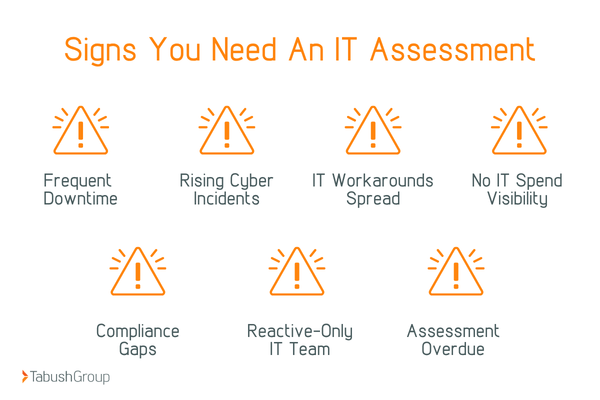
A law firm IT assessment is a structured review of the firm's technology environment, including hardware, network, Microsoft 365, cybersecurity, backups, and legal software. Most firms do not realize they need one until the symptoms show up. The seven signs below are the most reliable ones we have seen across 25 years of supporting law firms.
Any one sign is worth paying attention to. Two or three together is the signal that the time for an assessment has arrived.
The patterns here are drawn from Tabush Group's 2026 Survey on Law Firm Technology, our fifth annual survey of more than 230 law firm leaders. The findings reflect what is actually happening inside firms right now.
If you are a managing partner, firm administrator, or in-house IT lead who has a nagging sense that something is off, this piece is for you. We recommend you start with the 8 technology challenges facing law firms for context, then work through this list.
Sign 1: Frequent Downtime or Chronically Slow Systems
Recurring outages and sluggish systems are the most visible sign that a law firm IT assessment is overdue.
What It Looks Like In Practice
-
Microsoft 365 freezes during deadlines
-
Email goes down for hours with no clear cause
-
Practice management software crashes mid-task
-
Remote desktop sessions disconnect during calls
-
Searches take 30 to 60 seconds inside the document management system (DMS)
Why It Matters
Every recurring outage costs billable hours and erodes attorney confidence in the firm's technology. Downtime is the most visible symptom, but it is rarely the root cause. It usually points to aging hardware, an undersized network, or a server that has not been right-sized in years.
The remote access challenges that emerged during hybrid work have also added additional stress to your infrastructure.
What An Assessment Uncovers
Tabush Group's 360 IT Assessment reviews network infrastructure, servers, endpoints, cloud resources, application software, backups, and integrations as part of the technology pillar. The report surfaces hardware end-of-life dates, network bottlenecks, and any single points of failure that have been quietly accumulating.
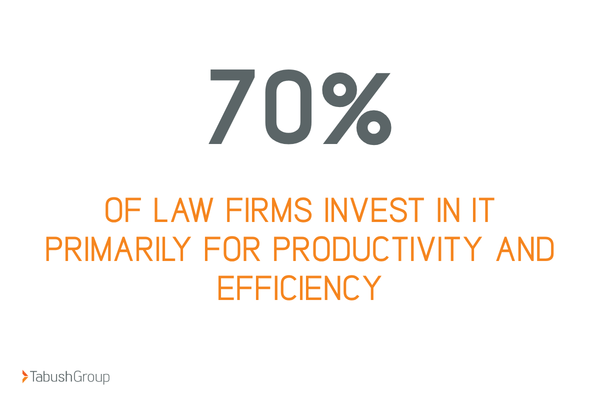
According to the 2026 Tabush Group Survey on Law Firm Technology, 70 percent of firms now cite productivity as the primary driver for IT investment. That is what downtime threatens directly.
Sign 2: Cybersecurity Incidents Are Getting More Frequent
Phishing attempts, suspicious sign-in alerts, and MFA bypass events that are increasing in regularity are a clear signal that the firm's security posture needs a structured review.
What It Looks Like In Practice
-
Phishing emails that bypass spam filters
-
Repeated 'suspicious sign-in' alerts on attorney accounts
-
Ransomware attempts on adjacent firms in your network
-
Failed multi-factor authentication (MFA) challenges from unknown locations
-
Internal data is being shared to a personal email by accident
Why It Matters
Cyber incidents in legal are not slowing down. They are accelerating. Confidence in firm cybersecurity is high, but the data does not back it up.
The Tabush Group's 2026 survey found law firm data breach incidence more than doubled from 6 percent in 2025 to 13 percent in 2026, while firm leaders' confidence in cybersecurity rose from 88 percent to 91 percent.
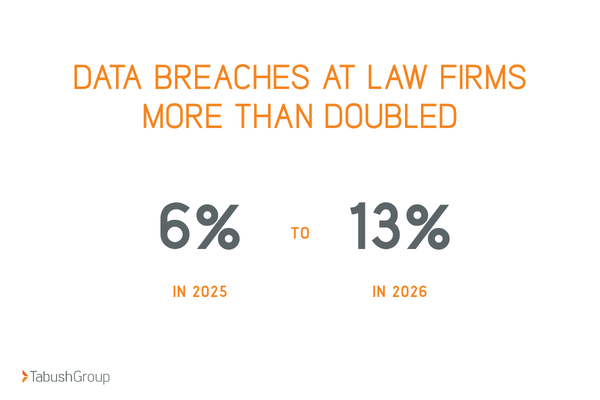
That gap is the problem. Flat spending, rising confidence, and a doubling of breaches in a single year are a strategic blind spot.
What An Assessment Uncovers
Tabush Group's 360 IT Assessment includes a cybersecurity pillar that examines systems for security risks and their potential implications, covering compliance requirements, user training and awareness, and overall posture. The report includes a Cybersecurity Score that identifies areas to strengthen.
For firms that want to go deeper, Tabush Group offers cybersecurity services, which include ongoing detection and response through Guardian, with all of our solutions.
Sign 3: Staff Are Working Around IT Instead Of With It
When people build workarounds, they are telling you the technology is not serving them.
What It Looks Like In Practice
-
Paralegals using personal Dropbox accounts to share files
-
Associates are emailing documents to themselves to print at home
-
Attorneys using personal smartphones to access matter files
-
Workflow workarounds that everyone knows but no one has documented
-
Frequent IT support requests for the same handful of pain points
Why It Matters
When people work around technology, they are telling you that the technology is not supporting their productivity. Workarounds also create compliance and data security gaps that are invisible until an audit, an incident, or a discovery request surfaces them.
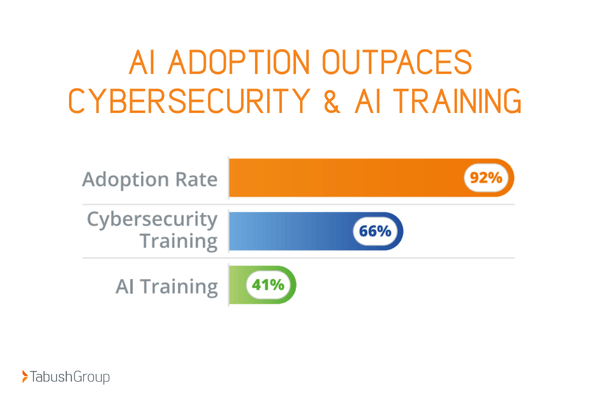
The 2026 Tabush Group survey found 92 percent of law firms now use AI, but only 41 percent invest in AI training. People are using new tools faster than firms can equip them, which is exactly how workarounds spread.
What An Assessment Uncovers
Tabush Group's 360 IT Assessment interviews leadership, the IT team, and select end users to capture how technology actually supports the firm's needs. The final report identifies where official workflows have diverged from the ones people are using.
Sign 4: You Have No Visibility Into IT Spending Versus Return
If the firm cannot answer "what did we get for this spend," the IT budget will always feel like a cost rather than an investment.
What It Looks Like In Practice
-
Monthly IT invoices with no project context
-
Hardware purchases that surprise the managing partner
-
Multiple software subscriptions paid by different departments
-
No single source of truth for what the firm is licensing
-
No way to answer 'what did we get for this spend' at year-end
Why It Matters
A firm that cannot tell you what IT is delivering for the dollar cannot defend the budget at partner meetings. That dynamic forces IT into a cost-center role, where every project becomes a negotiation rather than an investment.
The 2026 Tabush Group survey found that 70 percent of firms now invest in IT for productivity. That answer only holds up if the firm can show what each line item produces.
What An Assessment Uncovers
Tabush Group's 360 IT Assessment includes an Overview of Assets and a detailed inventory of hardware, software, and recurring services. The output is something a firm administrator can put in front of partners and defend.
Sign 5: Compliance Gaps You Cannot Quantify
Most firms know they have compliance obligations. Fewer can say exactly which controls are in place, where the gaps are, and what would happen on an audit or client questionnaire.
What It Looks Like In Practice
-
ABA Model Rule 1.1, Comment 8, technological competence obligations you cannot evidence
-
Client cyber addenda requiring controls you have not verified
-
HIPAA exposure on firms handling personal injury or medical matters
-
State data breach notification thresholds you have not mapped
-
Cybersecurity insurance applications you cannot answer without guessing
Why It Matters
The risk is not knowing. Insurers and clients are asking sharper questions in 2026 than they were just a few years ago. Firms without quantified answers will feel that pressure first.
Tabush Group's 2026 survey shows breach incidence doubling year over year; the gap between confidence and actual posture is a liability.
What An Assessment Uncovers
Tabush Group's 360 IT Assessment cybersecurity pillar reviews compliance requirements alongside controls. The Risk Assessment and Analysis section of the report identifies vulnerabilities and mitigation strategies, giving the firm something to hand to insurers, clients, or auditors with evidence rather than guesses.
Tabush Group cybersecurity services can address the gaps the assessment surfaces.
Sign 6: Your IT Team Is Reactive Instead Of Strategic
If your IT is spending most of its time closing tickets, they don’t have time for planning, and you are not getting the value you could from your technology.
What It Looks Like In Practice
-
Tickets are resolved one at a time with no pattern analysis
-
No quarterly business review or executive briefing
-
Roadmap conversations that get postponed every cycle
-
Hardware is replaced only after it fails
-
Vendor contracts that auto-renew without review
Why It Matters
Reactive IT keeps the firm running today and quietly costs the firm time and momentum tomorrow. The longer IT spends fighting tickets, the less time it spends on the projects that move the firm forward.
This is one of the most common patterns we see in firms that have been running without a formal assessment for several years.
What An Assessment Uncovers
Tabush Group's 360 IT Assessment processes pillar analyzes strategic planning, budgeting, change management, documentation, support, and monitoring. The SWOT Analysis section of the report quantifies where the IT function sits on the spectrum from reactive to strategic. Most firms are surprised by where they land.
Tabush Group's Edge co-managed IT model is the partnership pattern that solves this: the in-house IT person stays in their seat, and Tabush Group takes the reactive load so the in-house person can focus on strategic work.
Talk to a Tabush Group specialist to understand how that model works in practice.
Sign 7: Your Last Assessment Is More Than Two Years Old (Or You Have Never Done One)
An assessment from just two years ago does not reflect the current landscape. With new AI tools being leveraged and new cyberthreats constantly emerging, the infrastructure has changed.
What It Looks Like In Practice
-
No baseline of current hardware ages and end-of-life dates
-
No current network topology document
-
Cyber posture evaluated against frameworks from before the last AI wave
-
The disaster recovery plan was written before remote and hybrid work became normal
-
User access list that has not been reviewed since the last hire or departure
Why It Matters
Tabush Group recommends an IT assessment every 1 to 3 years, depending on firm size, risk exposure, and how much the technology environment has changed. Cyber threats evolve quarterly, and legal tech tools change every month, so a multi-year-old assessment quickly stops reflecting reality.
The 2026 Tabush Group survey covers more than 230 law firm leaders and reports 92 percent AI adoption, a doubling in breach incidence, and productivity overtaking security as the top investment driver. All three trends are less than 18 months old.
What An Assessment Uncovers
Tabush Group's 360 IT Assessment also includes 3- and 6-month follow-up meetings after the report, so the firm has accountability built in. A current assessment becomes the foundation for every other technology decision the firm makes in the coming year.
Get A 360 IT Assessment
One sign is worth paying attention to. Two or more is a clear signal that a structured review is due.
The Tabush Group 360 IT Assessment is the structured way to get answers. It covers technology, cybersecurity, IT processes, and end-user experience and delivers a written report with an Executive Summary, asset inventory, cybersecurity score, benchmarking data, SWOT analysis, and actionable recommendations.
You take the report and act on it with whichever provider you choose.
If you are not ready to start the assessment conversation yet, contact us, and we will help you figure out the right starting point. For firms considering fully managed IT services for law firms, the assessment is often where that conversation begins.
Tabush Group makes your IT life simpler.
FAQs
What Is a Law Firm IT Assessment?
A law firm IT assessment is a structured review of the firm's technology environment, including hardware, network infrastructure, Microsoft 365, cybersecurity controls, backups, user access, legal software, and IT documentation. The output is a written report that identifies risks, gaps, outdated systems, and practical improvements.
How Often Should a Law Firm Get an IT Assessment?
Tabush Group recommends conducting an IT assessment every 1 to 3 years, depending on firm size, risk exposure, and how much the technology or business environment has changed since the last review.
How Long Does a Law Firm IT Assessment Take?
The 360 IT Assessment is scoped to the firm. Tabush Group walks through a defined process covering stakeholders, IT processes, technology, and cybersecurity, then delivers a customized written report. The engagement also includes a stakeholder meeting after the report and 3- and 6-month follow-up meetings to track progress on the recommendations.
Who Needs to Be Involved in a Law Firm IT Assessment?
Tabush Group interviews and surveys leadership, the in-house IT team, if there is one, and a sample of end users. The goal is to capture how the technology actually supports the firm's work, not just how it is configured on paper.
What Deliverables Do You Get From a Law Firm IT Assessment?
Tabush Group delivers a customized, easy-to-understand report covering: an Executive Summary, an Overview of Assets, a Risk Assessment and Analysis, a Cybersecurity Score, Benchmarking Data, a SWOT Analysis, and End-User Feedback. The recommendations are yours to act on with whichever provider you choose.
Is an IT Assessment The Same as a Cybersecurity Audit?
No. A cybersecurity audit focuses narrowly on security controls. An IT assessment covers the entire technology environment, including security, but also performance, hardware lifecycle, vendor stack, compliance, and how the technology actually supports the firm's workflows.
Will an IT Assessment Disrupt Our Practice?
Discovery interviews and system reviews are designed to fit around billable work. Tabush Group has a proven, structured process and walks the firm through each step so the team can focus on the practice while the assessment runs.
What Does It Cost to Do an IT Assessment With Tabush Group?
Tabush Group's 360 IT Assessment is scoped to the firm. Pricing is shared during the initial consultation once we understand the firm's size and complexity. Contact us to start that conversation.