Cybersecurity for construction companies is the practice of protecting a company's project data, financial systems, email, and connected jobsite technology from attacks like ransomware, phishing, and payment fraud.
Construction was the most targeted industry for ransomware in 2024. It stayed in the top three in 2025. The risks are real, the attackers are organized, and most companies are running with small IT teams that have limited time to stay ahead of threats.
This piece covers the real 2026 threats that construction companies face and lays out a 5-step plan to reduce risks. If your company is prioritizing security or finding the right managed IT services for construction, here is where to start.
Why Construction Is A Top Cyber Target In 2026
Construction companies sit at the intersection of valuable data, tight deadlines, and a wide network of outside partners, and that makes them attractive to attackers.
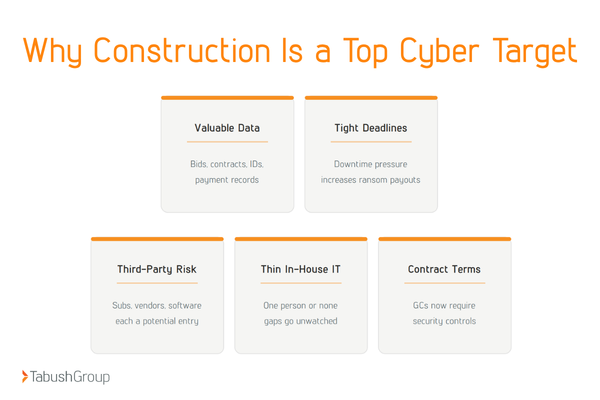
Valuable Data
Bids, contracts, employee IDs, tax records, and payment details all have resale or extortion value. A single breach can expose years of sensitive project and personnel files.
Tight Deadlines
Downtime is expensive on an active project, so the pressure to pay a ransom is higher than in many industries.
Third-Party Reliance
Construction companies deal with many subcontractors, vendors, and software platforms, and each is a possible entry point for cyberattacks.
Thin In-House IT
Many construction companies often have only one IT person or none at all, so gaps often go unnoticed.
Contract Requirements
General contractors (GCs) and large clients now write security terms into their contracts, so weak controls can cost your company work, not just data. Cyber insurers are also asking sharper questions about security controls before issuing or renewing policies.
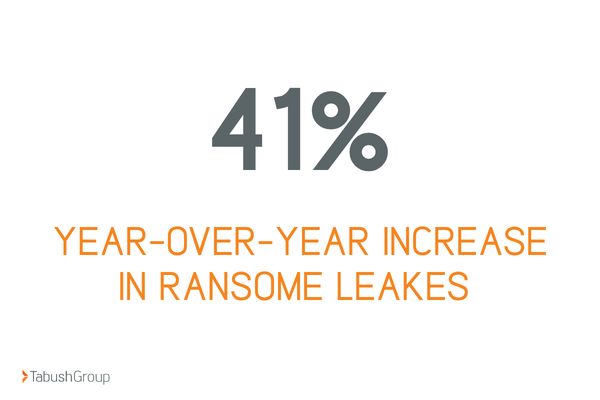
The numbers back it up. Construction led all industries in ransomware in 2024, with 439 documented victims (BreachSense). In 2025, the industry remained in the top 3, and ransomware leak sites rose 41% year over year (ReliaQuest).
The basics go a long way. Here is where to start.
The Most Common Attack Vectors
While cyberthreats are always evolving, here are a few common attacks construction companies face so you know what to look out for.
Ransomware
Ransomware encrypts your company’s files and can halt your project. Double-extortion attacks take it one step further and also leak stolen data if a ransom is not paid.
Groups target large contractors going after records and client data like IDs, legal docs, and tax records (ReliaQuest / Rapid7).
Phishing And Business Email Compromise (BEC)
Phishing is the most common way into a company’s network. Attackers impersonate vendors or subcontractors and fake invoices and payment-change requests aimed at accounts payable.
Progress billing cycles, change-order approvals, and high-dollar vendor payments make construction companies prime targets for this kind of fraud.
Remote And Jobsite Risk
Field teams often work on personal phones or tablets and connect through unsecured remote access.
Devices often get lost or stolen on site, and connected equipment on the jobsite, such as IoT and BIM platforms, widens the attack surface (Rapid7). These risks are part of a larger set of technology challenges faced by construction companies. Every device that touches the network is a potential point of entry.
Third-Party And Supply-Chain Risk
A weak link at a subcontractor, vendor, or software provider becomes the company’s problem. If your subcontractor’s email gets compromised, the attacker can pivot into your network or use the trusted relationship to send phishing emails.
A 5-Step Construction Cybersecurity Checklist
These five steps are the highest-value actions a construction company can take right now. They are listed in order. Start at the top.
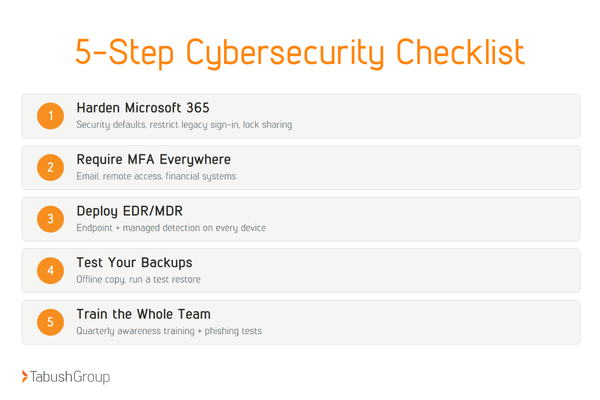
1. Harden Microsoft 365
Most companies run M365 and have never configured it properly for security. Turn on security defaults, restrict legacy sign-in, and lock down external sharing and forwarding rules.
2. Require Multi-Factor Authentication (MFA)
Email, remote access, financial systems. MFA adds a second verification step at login, and studies show it prevents the large majority of account-takeover attempts.
It is the single highest-return security control a company can put into place.
3. Deploy EDR/MDR On Every Device
Endpoint detection and response (EDR) monitors individual devices for suspicious activity while managed detection and response (MDR) adds a team that not only watches for alerts but takes action.
Together they catch threats that firewalls miss on office laptops and field tablets alike.
4. Test Your Backups
A backup you have never restored is a guess. Keep an offline or immutable copy and run a test restore so a ransomware hit does not stop the job.
If ransomware hits, a clean backup is the difference between a few hours of recovery and days of lost work.
5. Train The Whole Team, On A Schedule
From field supervisors to finance, run quarterly awareness training plus simulated phishing tests for all of your employees.
Training employees to verify payment-change requests by phone before processing them is one of the most effective ways to prevent phishing and BEC losses in construction.
People are the most common entry point for an attack and the best early warning system when something looks off.
Where A Managed IT Partner Fits
Most construction companies reach a point where keeping up with security on their own is not realistic. A partner that monitors for threats 24/7 fills that gap without requiring the company to build an internal security team from scratch.
Guardian SOCaaS provides 24x7x365 monitoring, detection, and remediation without requiring the company’s intervention.
Edge Co-Managed IT services are for those who have an in-house IT person. It adds Tabush Group’s tools, expertise, and monitoring to the existing team, so the in-house person gets support without being replaced. For companies with no internal IT, fully managed IT covers everything.
For companies that want to know where they stand before making any changes, a 360 IT Assessment gives a clear baseline to work from.
Keep Your Construction Company Secure
Construction is a target. The threats are known.
The good news is that the five steps above are achievable for companies of any size. Hardening Microsoft 365, enforcing MFA, deploying detection tools, testing backups, and training the team will close most of the gaps attackers look for.
Tabush Group has spent 25 years partnering with construction companies. If your company is ready to strengthen its security posture or wants a partner to handle monitoring and hardening, start with managed IT services for construction or explore Tabush Group’s cybersecurity solutions. If a baseline assessment is the right first step, the 360 IT Assessment is an easy place to begin.
Frequently Asked Questions
Why is the construction industry a target for cyberattacks?
Construction companies hold valuable data (bids, contracts, IDs, and payment records), run on tight deadlines that make downtime costly, and depend on many subcontractors and vendors. Many also have small IT teams. That mix makes them attractive to ransomware and payment-fraud attackers, and construction has ranked among the most targeted industries in recent years.
Additionally, construction teams are often spread across multiple job sites and work with an ever-changing network of vendors, leaving them especially vulnerable.
What are the most common cyber threats for construction companies?
The most common threats are ransomware (which encrypts files and stops a project), phishing and business email compromise (fake invoices and payment-change requests aimed at accounts payable), unsecured remote and jobsite access, and third-party or supply-chain risk from subcontractors, vendors, and software providers.
How can a construction company protect itself from ransomware?
Start with five steps: harden Microsoft 365, require multi-factor authentication everywhere, deploy endpoint and managed detection (EDR/MDR), keep tested and offline backups, and train the whole team on a regular schedule. A managed detection service adds around-the-clock monitoring that most in-house teams cannot provide alone.
Do small construction companies need managed IT services?
Small companies are targeted precisely because they often lack dedicated security staff. Managed IT services, or a co-managed model that supports an existing IT person, provide monitoring, hardening, and support without the cost of a full internal security team. This helps a company meet many regulatory and compliance requirements and reduces the risk of a disruptive breach.
How much can a cyberattack cost a construction company?
A ransomware attack can halt active projects, delay payments, and trigger contract penalties. Beyond the ransom itself, costs include downtime, legal review, client notification, and reputational damage. For small and midsize companies, even a few days offline can mean six figures in lost productivity and recovery expenses.
What is SOCaaS and how does it help a construction company?
SOCaaS (Security Operations Center as a Service) provides 24/7 threat monitoring, detection, and response without requiring the company to staff a full security team. For construction companies with small or stretched IT teams, SOCaaS fills the gap between basic antivirus and enterprise-level security, catching threats around the clock so the company can stay focused on the job.