A managed IT services provider (MSP) is a company that runs, monitors, and secures your firm's technology for a predictable monthly fee. Choosing the right one in New York City comes down to several things: response time, cybersecurity, NYDFS-aware security, on-site capability, industry expertise, scalability, transparent pricing, and cultural fit.
NYC firms face a dense regulatory environment, high billable-hour cost of downtime, and a physical office reality, making the MSP decision more consequential here than in most markets.
According to the 2026 Tabush Group Law Firm Survey, 44% of firms now outsource their IT management, up from 33% in 2024. This means that more firms than ever are evaluating MSPs.
This guide will walk you through the exact criteria, red flags, and questions to use when choosing a managed IT provider for NYC firms. Whether you're selecting your first MSP or considering switching from one that isn’t working, here is a framework to help you compare.
Why Choosing an MSP in NYC Is Different From Choosing One Anywhere Else
New York City firms face conditions that generic MSP advice does not address.
Regulations
If your firm is in financial services, legal, insurance, or a related field, you likely fall under NYDFS 23 NYCRR 500, the New York Department of Financial Services cybersecurity regulation. The NY SHIELD Act adds data-breach notification and safeguard requirements that apply broadly to businesses handling private information of New York residents.
Cost of Downtime
Billable rates for NYC attorneys and financial service providers are among the highest in the country. Every hour of downtime you experience reflects a loss of revenue that smaller firms do not experience at the same level.
Shared Offices (and Lack Thereof)
In NY, most firms are located in dense multi-tenant office buildings or shared risers where the network infrastructure is landlord-controlled. There are also often hybrid work setups across the city, creating challenges that a remote-only MSP may not encounter often.
An MSP with feet on the street understands these conditions.
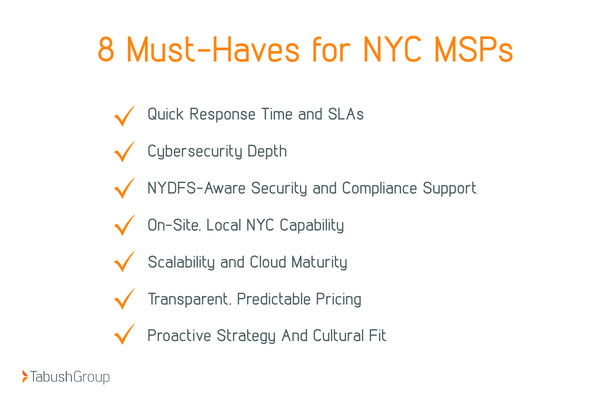
What To Look For In A Managed It Provider: The 8 Must-Haves In A New York Managed It Provider
This is the framework you should apply to every provider you evaluate. Each must-have includes what good looks like in practice.
1. Quick Response Time and SLAs
Their service level agreement (SLA) should detail their response time in writing with time frames for specific severities. If the SLA is vague or absent entirely, that tells you everything you need to know about the provider. Ask to see their SLA document and confirm it includes escalation paths and responsibilities.
2. Cybersecurity Depth
In these highly regulated and highly targeted industries, cybersecurity is a requirement.
Your provider should deliver:
-
Endpoint detection and response (EDR/MDR)
-
Email and phishing defense
-
24/7 monitoring
-
User awareness training
-
A written incident-response plan
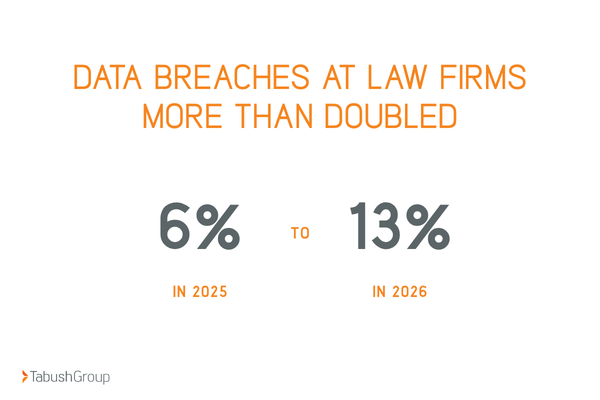
The 2026 Tabush Group Survey on Law Firm Technology found that firms reporting data breaches doubled from 6% in 2025 to 13% in 2026, even as 92% of leaders expressed confidence in their cybersecurity measures. Phishing remains the top attack vector at 60%, and ransomware held steady at 27%.
That gap between confidence and outcomes makes it critical to verify what protections your MSP actually delivers, not just what they claim.
3. NYDFS-Aware Security and Compliance Support
If your firm falls under NYDFS 23 NYCRR 500, ABA ethics opinions on technology competence, HIPAA, or other regulatory frameworks, your MSP should understand the controls those regulations require.
The right provider will be able to help you set up MFA, monitoring, and documented controls to create systems that support audit readiness and keep up with regulatory changes.
Note: The compliance obligation always remains with the firm. Your MSP supports compliance. No provider can guarantee it on your behalf.
4. On-Site, Local NYC Capability
Is their online support team available during your working hours? When a major technical problem arises that remote support cannot resolve, can your MSP send someone to your office? If the answer is no, that provider is not built for how NYC firms operate.
5. Industry Expertise In Your Vertical
An MSP that serves law firms, accounting firms, financial services, construction, and real estate brings knowledge that a generalist does not.
They know your workflows, software stack, regulatory environment, and client expectations. Ask them about the industries they support and ask to speak with one of their clients or review a success story.
6. Scalability and Cloud Maturity
Your MSP should be able to support your infrastructure, whether that is M365 governance, desktop as a service (DaaS), or a hybrid and cloud environment. They also need to be able to scale up and down with your business needs.
Ask about their approach to choosing the right cloud architecture for your firm and their strategy for your technology as your firm evolves and time goes on.
7. Transparent, Predictable Pricing
They should be able to provide a proposal that documents the pricing models and details what is included and what is extra. If the provider is vague, treat that as a signal of how they operate and expect surprise fees in the future.
8. Proactive Strategy And Cultural Fit
The best MSPs conduct regular strategic reviews, provide technology roadmaps, and bring recommendations before problems arise.
Beyond technical skills, you want to consider whether the provider is someone your team trusts and can communicate with. A strong IT partnership depends on the relationship as much as the technology.
Red Flags To Watch For When Evaluating NYC MSPs
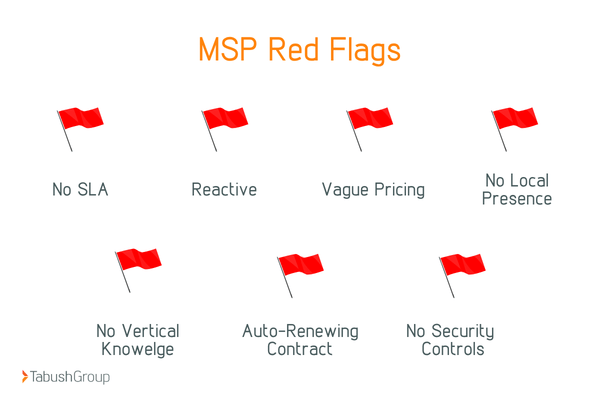
When you are comparing providers, watch for these warning signs:
-
No written SLA or response-time commitment
-
Reactive posture with no strategic reviews
-
Vague or bundled pricing that you can't decompose
-
No on-site option
-
No references in your vertical
-
Auto-renewing contracts with no exit terms
-
Can't provide evidence of their own security controls
If you are unsure where your current IT stands, a 360 IT Assessment can give you a clear baseline before you begin evaluating new providers.
5 Questions To Ask In An NYC MSP Demo
Take these into your next call:
-
What is your guaranteed response and resolution time in writing?
-
How do you help us meet NYDFS / SHIELD Act / our clients' security requirements?
-
Who physically shows up in NYC, and how fast?
-
How many firms like ours do you support, and can we talk to one?
-
What does the all-in monthly price include, and what triggers extra cost?
These five questions will surface how a provider operates day to day, not just how they present in a sales meeting. The answers, or the inability to answer clearly, will tell you most of what you need to know. Talk to a Tabush Group specialist.
What Managed IT Services Cost in NYC (And What Drives Price)
Most managed IT services providers in NYC price their services on a per-user or per-device monthly subscription. Others use tiered models that bundle their support, cybersecurity, and management together.
When reviewing your options, consider what's usually included and what is an add-on. Common add-ons include security stack, projects, hardware, and compliance work.
NYC pricing often runs above national averages. This is largely due to factors such as labor, on-site expectations, and compliance requirements. A clear answer here separates providers who price transparently from those who rely on scope ambiguity.
Why Local Matters: National MSP vs. NYC-Based Provider
Remote-only national MSPs can deliver strong remote monitoring and support. An NYC-based provider can be on-site quickly when hardware fails.
They also have specialized NYC knowledge. They understand NYC building infrastructure, landlord IT policies, and the specific challenges of supporting hybrid teams split across boroughs and suburbs. They are familiar with the regulations that apply to firms operating in New York and maintain relationships with local vendors and building management teams.
Choose a Provider That Fits Your Firm
The right managed IT provider for your NYC firm meets the eight criteria above, answers the five demo questions with clarity, and shows none of the red flags. They support your compliance obligations, protect your data, respond fast, and think strategically about your technology future.
Tabush Group has spent 25 years serving NYC firms with a data-center presence and specialized knowledge in law, accounting, finance, construction, and real estate.
If you are evaluating providers or considering a switch, learn more about managed IT services in New York from a team that has been doing this in the city for a quarter century. Or contact Tabush Group directly to start a conversation.
Tabush Group makes your IT life simpler.
Frequently Asked Questions
How do I choose a managed IT services provider in NYC?
Evaluate providers against eight criteria: guaranteed response time and SLAs, NYDFS-aware security, compliance support, on-site NYC capability, expertise in your industry, scalability and cloud maturity, transparent pricing, and proactive strategy. Ask for a written SLA, references in your vertical, and a clear breakdown of what the monthly fee includes.
What should an NYC-managed IT provider cost?
NYC MSPs typically price per user or per device on a monthly subscription and run above national averages because of higher labor costs, on-site expectations, and heavier compliance requirements. Ask what is included in the base fee versus what is billed separately, such as security tooling, projects, hardware, and compliance work.
What questions should I ask an MSP before hiring them?
Ask for their guaranteed response and resolution times in writing, what cybersecurity protections they include (MFA, endpoint detection and response, email security, 24/7 monitoring, user training, and incident response), how they help you meet NYDFS and client security requirements, who physically shows up in NYC and how quickly, how many firms like yours they support, and exactly what the monthly price includes and what triggers extra cost.
What are red flags when choosing a managed IT provider?
Watch for no written SLA, a reactive ticket-only model with no strategic reviews, a thin cybersecurity stack (no MFA, endpoint protection, or 24/7 monitoring), vague or bundled pricing, no NYC presence or on-site option, no references in your industry, auto-renewing contracts with no exit, and an inability to evidence their own security controls.
Do I need an MSP with a physical presence in New York City?
For many NYC professional-service firms, yes. A local provider can be on-site quickly for hardware and office issues, understands NYC building and hybrid-work realities, and is familiar with the regulations that apply to firms operating in New York. National remote-only MSPs often cannot match that.
What is NYDFS 23 NYCRR 500, and does my MSP need to know it?
It is the New York Department of Financial Services cybersecurity regulation that applies to many financial and financial-adjacent firms operating in New York. If it applies to you, your MSP should understand the controls it requires and help you put documentation and safeguards in place, though the compliance obligation remains the firm's.
What is the difference between an MSP and a co-managed IT model?
The main difference between an MSP and a co-managed IT model is that a fully managed MSP runs your IT end-to-end, while a co-managed model keeps your in-house IT team and adds the provider's tools, security, and capacity so the internal team can focus on strategic work instead of day-to-day tickets.
How long does it take to switch managed IT providers?
A well-run transition is scoped to the firm and usually planned in phases so daily work is not disrupted. A good provider documents your environment, plans the cutover around your calendar, and walks the team through each step rather than forcing a hard switch.